UGC vs AI UGC — Which Performs Better on Meta?

4 min read
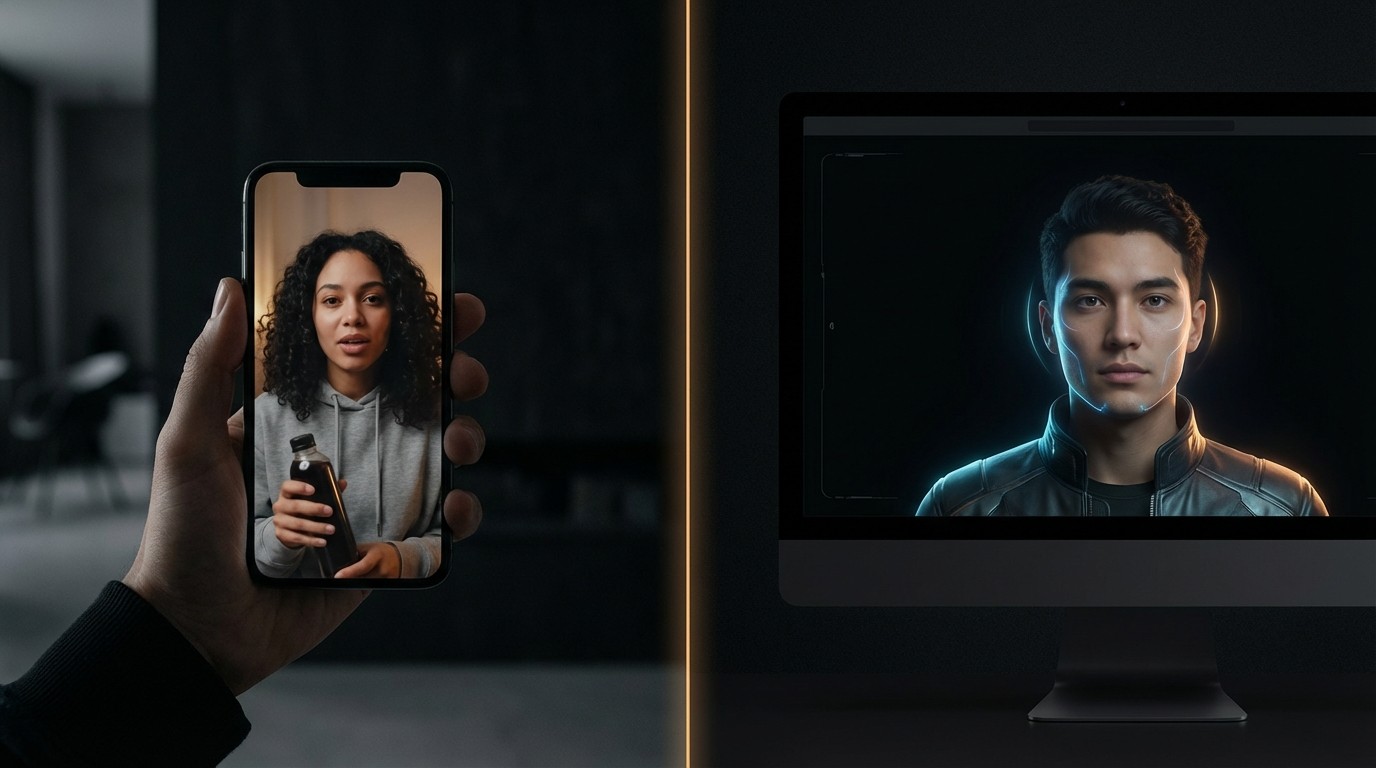
The debate is everywhere right now.
Traditional UGC creators vs AI-generated UGC. Real people vs digital avatars. Authentic vs efficient.
We stopped debating and started testing.
Here's what actually happened when we ran both head to head on Meta.
What We Tested
We ran a split test across three ecommerce brands over 30 days.
Traditional UGC: Real creators filmed authentic review-style videos. Average production time: 18 days. Average cost per video: $280. Total variations per month: 5.
AI UGC: AI-generated avatar videos using the same scripts, hooks, and offers. Average production time: 48 hours. Average cost per video: effectively $0 beyond the platform subscription. Total variations per month: 60+.
Same ad spend. Same targeting. Same offers. Different creative production method.
What the Data Showed
Click-Through Rate: Traditional UGC: 2.1% average CTR AI UGC: 1.9% average CTR
Traditional UGC edged ahead slightly on raw CTR. Real faces with genuine micro-expressions and natural imperfections resonated marginally better at first glance.
Cost Per Acquisition: Traditional UGC: $41 average CPA AI UGC: $28 average CPA
AI UGC won decisively on CPA — and the reason is volume. With 60+ variations running simultaneously, the algorithm found winning combinations faster and optimised more aggressively. The top 3 AI UGC creatives outperformed every traditional UGC creative in the test.
Time to First Winner: Traditional UGC: 19 days (had to wait for production) AI UGC: 4 days
Creative Fatigue: Traditional UGC creatives fatigued at day 8 on average. AI UGC — because of constant variation — maintained performance across the full 30 days through continuous refresh.
Why AI UGC Won on CPA Despite Slightly Lower CTR
The math is simple.
A 2.1% CTR with 5 creatives gives you 5 data points.
A 1.9% CTR with 60 creatives gives you 60 data points — and the probability of finding a top performer in that batch is dramatically higher.
The best AI UGC creative in our test had a 3.4% CTR — higher than every traditional UGC creative. You only find that creative by testing at volume.
This is the fundamental argument for AI UGC: not that every AI creative is better, but that when you produce enough of them, the winners are exceptional — and you find them faster than any traditional production method allows.
When Traditional UGC Still Wins
Honest answer: there are still cases where real creators outperform AI.
High-ticket products with complex decisions. When a purchase requires significant trust, real people with real faces and real stories build credibility faster.
Niche communities with strong authenticity radars. Certain audiences — fitness, wellness, natural beauty — are highly sensitive to anything that feels manufactured. Real creators feel safer here.
Social proof at scale. A genuine customer testimonial from a verified buyer carries weight that even the best AI avatar cannot replicate.
The smart approach in 2026 is not choosing one over the other. It's using AI UGC for volume testing and traditional UGC for proven winner amplification.
Test at volume with AI. Scale the winners. When a winning angle is proven, bring in a real creator to amplify it with authentic social proof.
The Bottom Line
AI UGC is not a replacement for human creativity and authentic storytelling.
It's a replacement for slow, expensive creative production that prevents you from testing at the speed the algorithm rewards.
If you're spending $280 per video to produce 5 creatives per month, you're not running a creative strategy. You're hoping.
AI UGC lets you test 60 hypotheses for the same cost. That's not a marginal improvement. That's a structural advantage.
Want to see how AI UGC performs for your specific brand and offer?